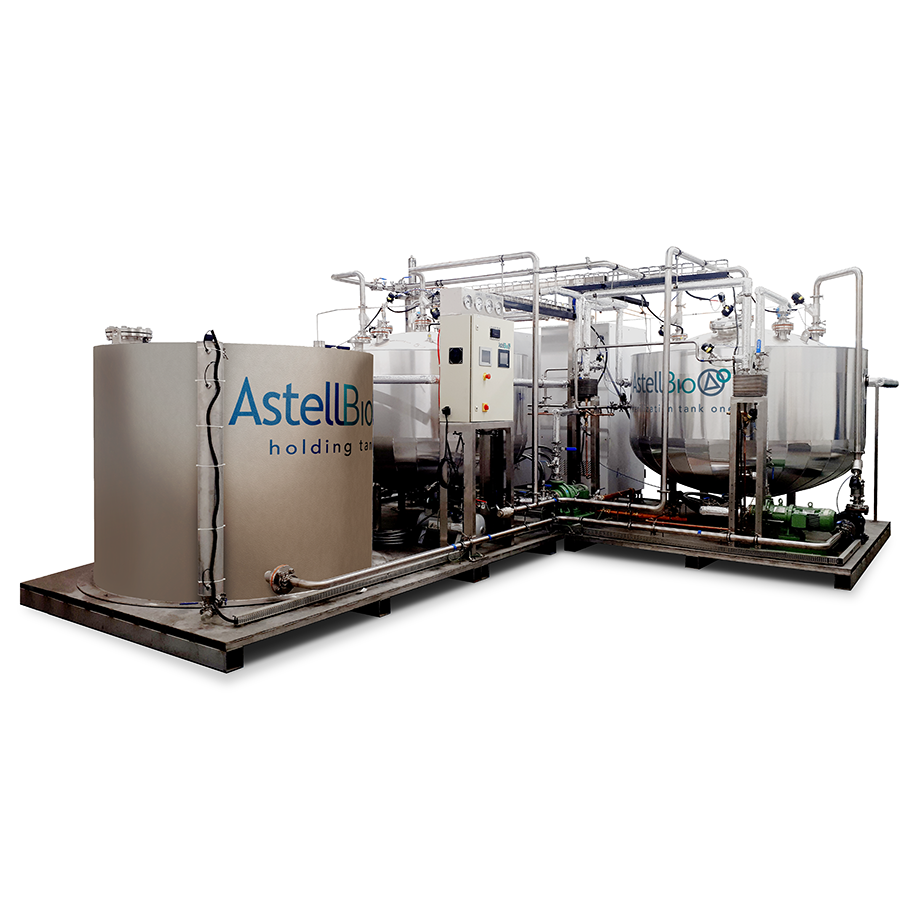
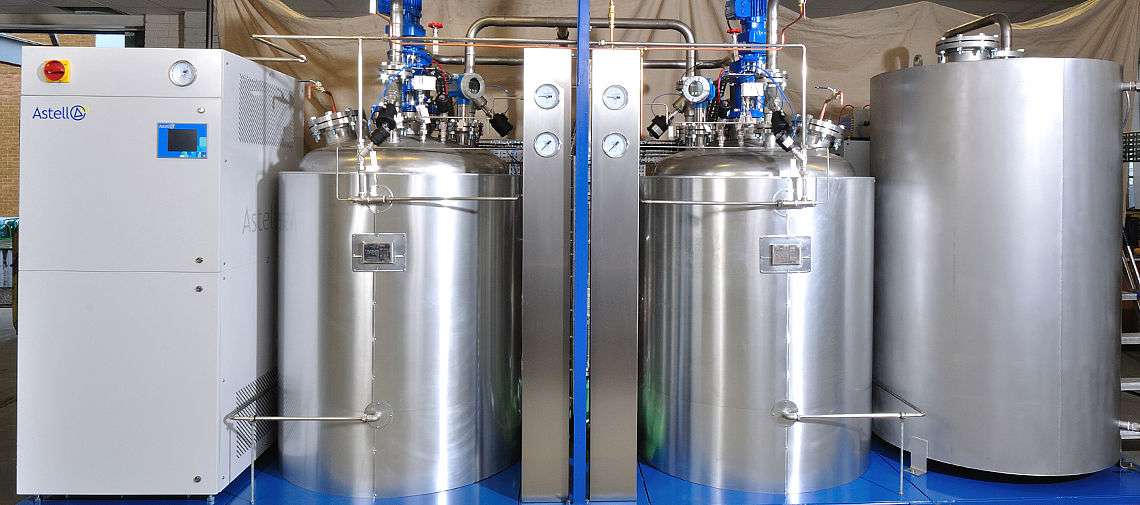
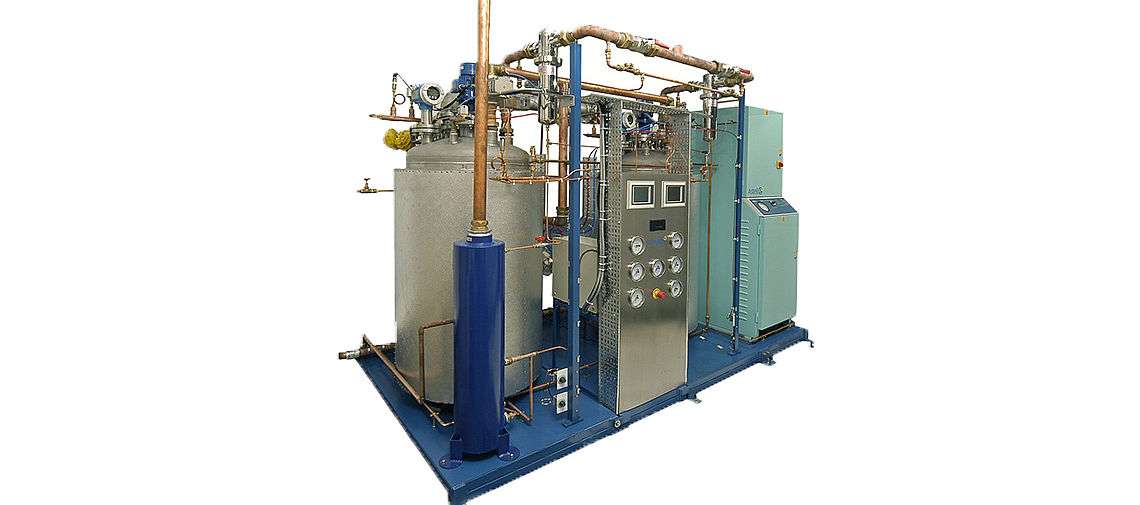
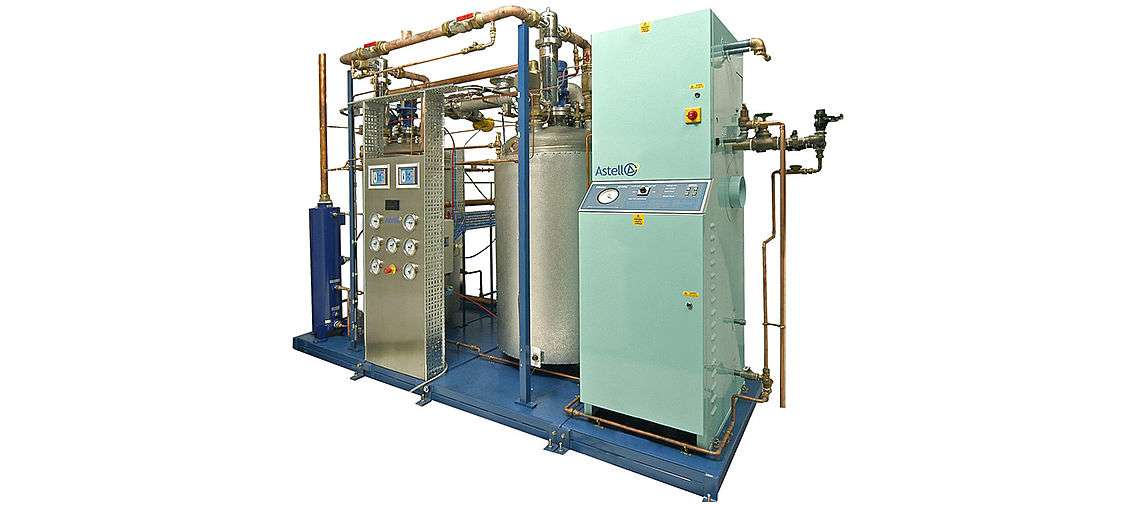
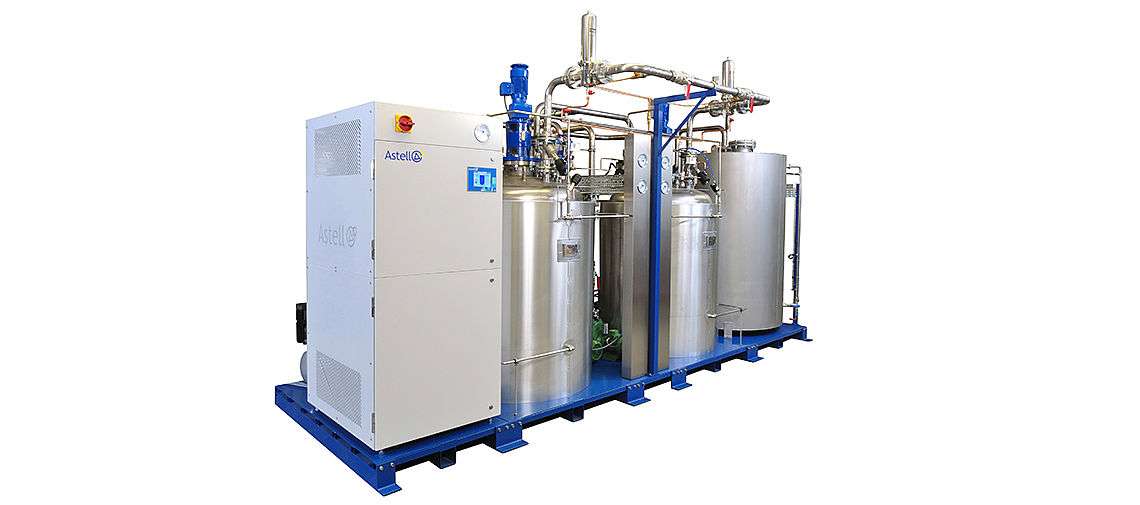
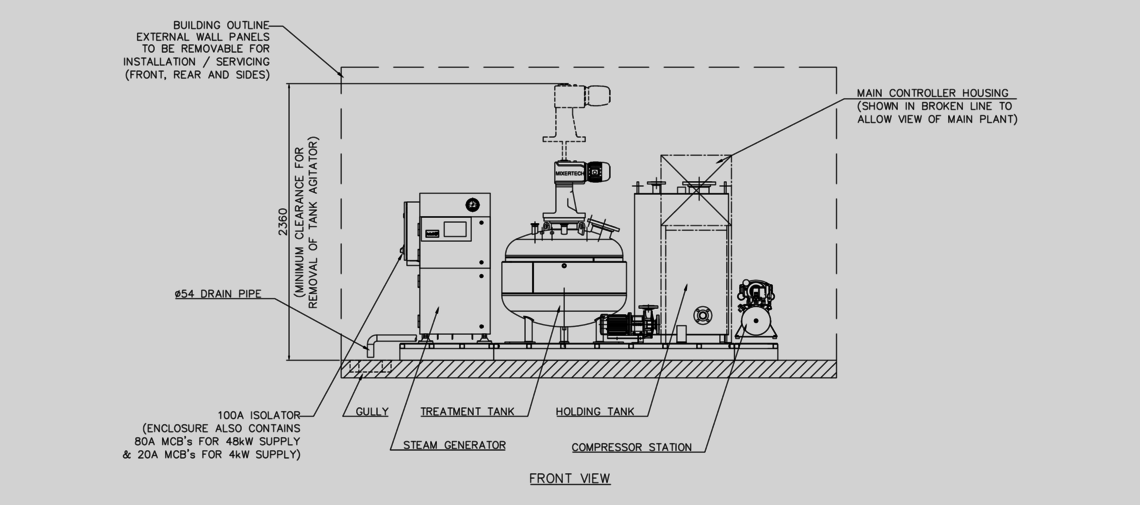
AstellBio batch Effluent Decontamination Systems can be designed to operate as either gravity fed or pump driven, or a combination. Where it is possible to locate the EDS beneath the structure of the research facility, gravity can be harnessed to draw the waste water to the sterilizing tank(s). Pump fed Effluent Decontamination Systems become applicable where the tanks aren't sited below ground or in a basement location. Pumps are used to control the flow of effluent to the collection tanks. Whilst adding a little complexity, it does offer potential benefits to site location and is a highly configurable solution ideal for overcoming space limitations and layout challenges. Both feed types are capable of handling liquids and liquid/solid mixtures. A batch EDS system operates on a run-standby basis when more than one tank is specified.
HOW DOES IT WORK?
THE BATCH EDS KILL TANK
The treatment of biologically hazardous wastewater and effluence is what our EDSs do, but how?
If you want to understand how to decontaminate biohazardous wastewater, take a look at our downloadable PDF.
A single tank batch Effluent Decontamination System (EDS) comprises of one collection tank, which also acts as the sterilization vessel. Once filled, the sterilization cycle processes the waste water then reverts to collection. The single tank EDS system is ideal for low volume effluent treatment in controlled environments and can be set to process waste when full and/or at set times of the day.
SINGLE TANK + STEAM GENERATOR
In instances where there is no existing steam source, the single tank Effluent Decontamination System (EDS) can be supplemented by the addition of a stand-alone steam generator. The steam generator will provide all the steam required for sterilizing the throughput from the single tank effluent system whilst occupying minimal floor space.
TWIN TANK
A twin tank batch Effluent Decontamination System (EDS) system operates on a run-standby basis utilising one tank for collection whilst the other is sterilizing. The twin tank EDS system brings greater flexibility and capacity over a single tank system, and is better able to cope with peaks in demand. AstellBio batch Effluent Decontamination Systems are capable of handling both liquids and liquid/solid mixtures and can be customized around your exact requirements.
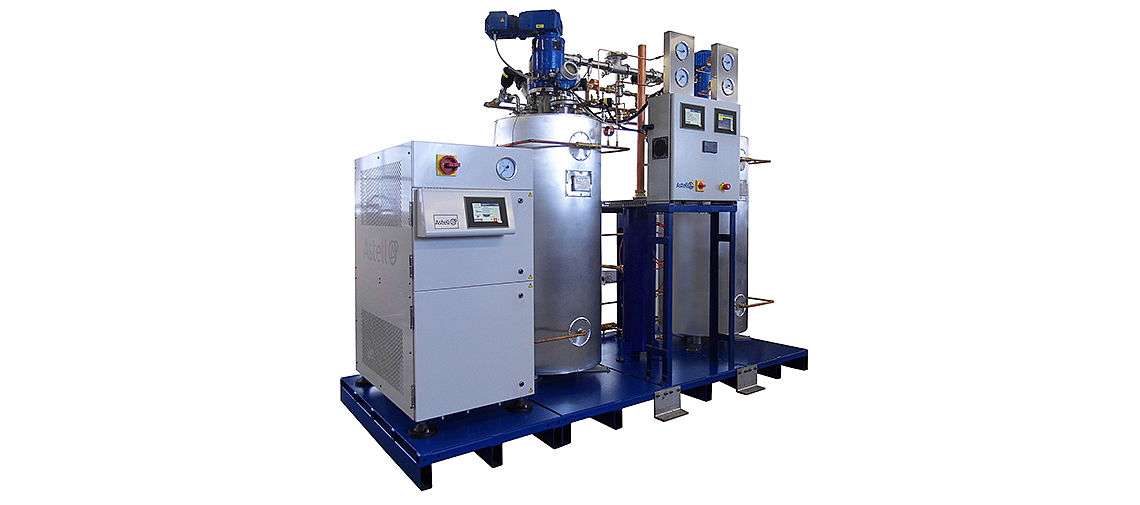
TWIN TANK + STEAM GENERATOR
For facilities that do not have an in-house steam source, Astell produce the twin tank Effluent Decontamination System with stand-alone steam generator. This system benefits from the addition of a 72kW stand-alone steam generator, usually positioned next to the EDS, meaning it requires only mains water and electricity supply. This system caters for containment developments that do not operate a central steam supply.
SINGLE OR TWIN TANK + STEAM GENERATOR + HOLDING (COLLECTION) TANK
For high volume batch waste processing, the addition of a holding/collection tank allows effluent to be contained whilst sterilization may be taking place in the main tank(s). This option is perfect to build in redundancy and cover busy periods often experienced through the working day.
Data archive, all cycles stored in memory and can be downloaded via ethernet and or captured via a printer (optional extra)
Analogue and digital pressure displays
Double valving on effluent input to protect incoming source
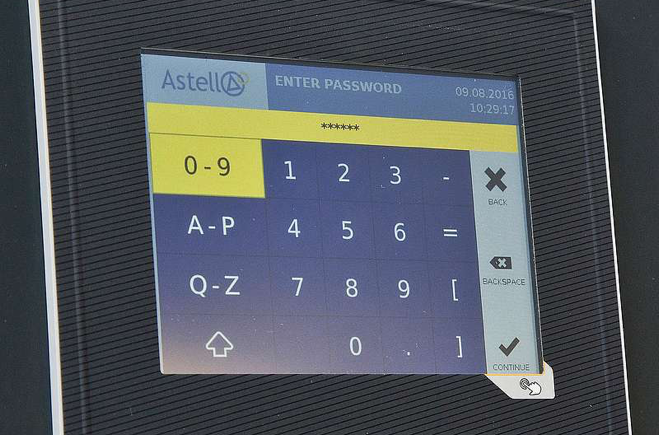
Ability to manually override the whole system (password protected)
Jacket heating and cooling on the sterilization pressure vessels
Sterilization tank agitation to help heating and cooling times and stop solids from settling on the pressure vessels bottom
Stainless steel pressure vessels
Integral or external steam / heating supply
Fully demountable for easy shipping and install
Radar level controlling – for accurate tank level monitoring
Steam sterilizable bacterial vent filters
Inspection hatch
Stainless steel pipework to first valve pipework, or all stainless steel pipework
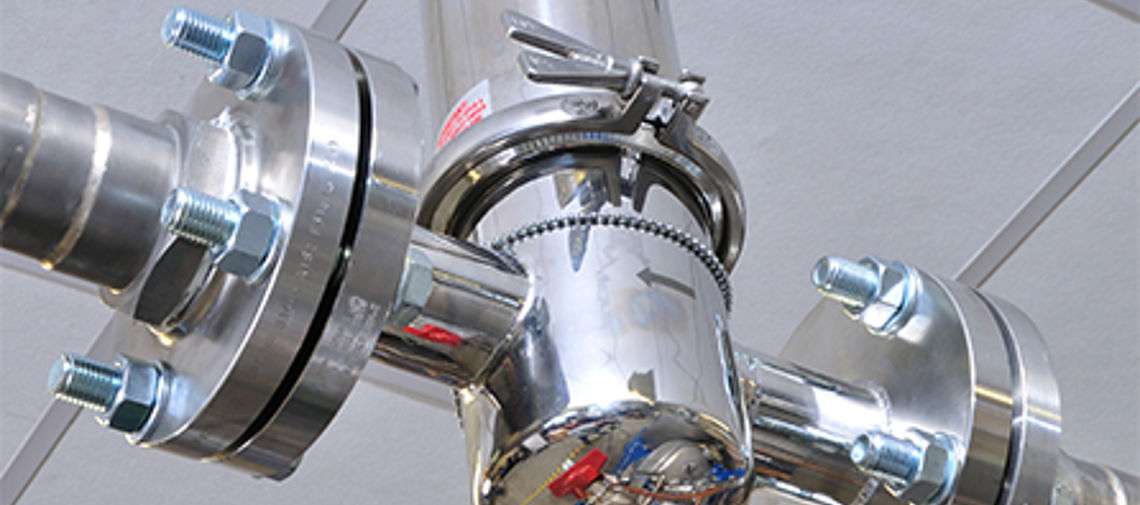
All connections are on the top of the pressure vessel to reduce liquid leaks on to the floor or the need to empty a pressure vessel to repair leaks. Connections can be flanged or Tri-clamp
Clean in place (CIP) points to allow contaminated pipwork to be steamed for maintenance
Pumped systems use magnetically driven pumps to reduce the likelihood of leaks
Options and upgrades
Agitation to provide better heat distribution and distribute solids
Holding tank
Higher grade vessel material for special applications
Internal heating and cooling coil – to improve cycle times
Double valving on all valves
Hygienic instrumentation, valves, gauges and transducers
Cooling water recirculation – to reduce water consumption
Connection to a chilled water supply or a flow and return system to reduce water usage
Valve position monitoring
Full orbitally welded stainless steel pipework with tri-clamp connections
Fully insulated sterilization pressure vessels
Steam generators can be fitted to the plant to add redundancy for the site supply or be the main heating source
Automatic de-scaling system. An option to allow the system to be automatically de-scaled. This option does need some manual intervention
Sampling point to allow samples to be taken for sterility testing
Stainless steel frame made in sections to allow the plant to be stripped for shipping and easy installation
TECHNICAL SPECIFICATIONS
Capacity (Litres per 8hr day)
Cooling method
Sterilization tank
(Litres)
Single tank
Double tank
Steam Generator
Holding tank
(Litres)
BSL category
Solids
(up to 4mm)
Sterilizing
temperature
Water Jacket
Chilled water
Flow /
Return option
EDS 350
1000 L
1500 L
500 / 1000 L
II / III
121°C/ 135°C
EDS 500
1600 L
2400 L
1000 L
II / III
121°C/ 135°C
EDS 750
2200 L
3100 L
1500 L
II / III
121°C/ 135°C
EDS 1000
2700 L
3900 L
External - 150kg/hr
1500 L
II / III
121°C/ 135°C
EDS 1500
4200 L
6300 L
External - 200kg/hr
2000 L
II / III
121°C/ 135°C
Our AstellBio experts are waiting to assist you with your enquiry
Digital process management with security and repeatability.
Astell supplies all its steam generators fitted with its unique PLC based touchscreen controller. It provides an easy-to-use interface for selecting and customising cycle data, changing machine parameters and reviewing the in-built archive capable of storing up to 5,000 previously run cycles. The touchscreen control module provides automatic operation and monitoring of the entire system, including data logs, alarms, and sensor information.