• Home
  • All about EDS
  • Products
  • Resources
  • About Astell
  • Contact us
+44 (0)20 8309 2031

Products Contact
Contact Us
  • Home
  • About Astell
  • Contact

Sign up for news

Please review our Privacy Policy for how we use your data.


Batch Process Systems

Continuous Flow EDS

Steam Generators

Liquid Waste Autoclaves: Safe, Automated Biohazard Sterilization for Life Sciences

In the life sciences and biotech industries, managing biohazardous liquid waste safely is critical. AstellBio’s liquid waste autoclaves provide fully automated, chemical-free sterilization that protects your staff, environment, and compliance goals. Using heat under pressure, these systems destroy harmful biological agents efficiently — no manual handling, no hazardous chemicals, all while minimizing the risk of environmental contamination. Whether processing batch or continuous flow liquid waste, our autoclaves deliver consistent, validated sterility for your containment laboratory’s liquid biohazard disposal needs.

Liquid Waste Biohazard
Decontamination and
Disposal in the Life Sciences

In life sciences and biotechnology, the sterilization of biohazardous materials is a critical component of containment and risk management. It is essential for preventing cross-contamination and ensuring that hazardous biological agents remain confined within appropriate Containment Level (CL) or Biosafety Level (BSL) facilities.

Autoclaving is widely regarded as the gold standard for sterilization. The application of moist heat via pressurized steam is both highly effective and non-additive—it introduces no chemicals or residues to the materials being sterilized. For solid items such as glassware, stainless steel instruments, and clean liquids like growth media, autoclaving is the preferred method in most laboratories due to its efficacy, simplicity, and the absence of chemical hazards or contaminants.

However, challenges arise when autoclaving large volumes of biohazardous liquid waste. Transferring such liquids into autoclavable containers, loading them into the autoclave, and waiting for extended cooling periods—even with advanced cooling systems—can be a laborious and time-consuming process. Additionally, the physical handling of contaminated liquids introduces risks at multiple stages, prompting some facilities to seek alternative methods for decontamination prior to disposal.

One such alternative is chemical sterilization, which offers perceived ease of use. Biohazardous liquid waste can be directed into a holding tank, mixed with a chemical sterilant, and left for a prescribed contact time. During this period, the chemical acts upon the biological material, denaturing proteins and disrupting cellular structures to render the waste non-biohazardous.

Yet chemical sterilization presents its own risks and operational complexities. By their nature, chemical sterilants are hazardous to life and must be handled and stored with extreme caution. Substances like sodium hypochlorite (bleach) are not only biologically reactive but also chemically unstable. For example, bleach begins to degrade within 30 days of opening. While more stable alternatives exist, all chemical sterilants have limited shelf lives and require robust inventory tracking to ensure potency.

To compensate for potential degradation or inconsistent mixing, operators often use an excess of chemical to guarantee sterilization—a practice that introduces further environmental and safety concerns.

Following chemical decontamination, treated liquid waste is typically discharged into municipal sewer systems. However, even trace amounts of chemical sterilants can be toxic to aquatic life. Although modern sewage systems are designed to mitigate this risk, aging infrastructure, leaks, and overflows can result in contamination of groundwater or natural bodies of water. This concern is heightened in regions where wastewater is directly discharged into streams, rivers, or coastal areas—as has been observed across the United Kingdom—allowing residual sterilants to enter the environment before sufficient degradation occurs.


What Is a Liquid Waste Autoclave?

A liquid waste autoclave is a machine that automatically sterilizes liquid waste using the autoclave process. This device offers several advantages over other methods of liquid waste sterilization.
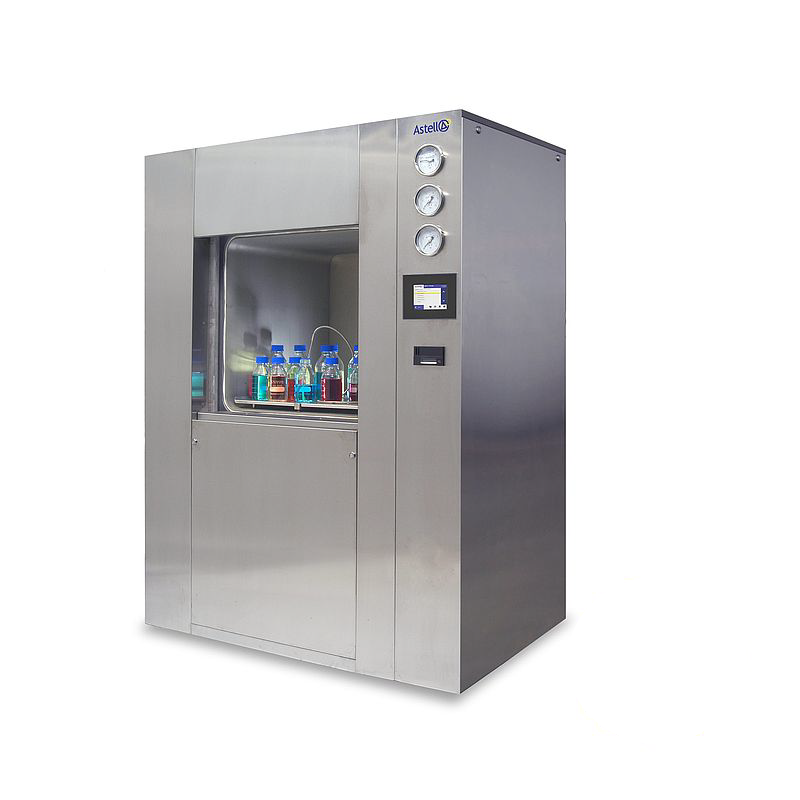
A Traditional Autoclave
A Liquid Waste Autoclave


Traditional autoclaves require manual loading and unloading of containers filled with liquid waste—a cumbersome and potentially hazardous process, particularly because the sterilized liquid can remain hot after treatment. A liquid waste autoclave eliminates this risk by automatically handling and disposing of the liquid waste without the need for manual input.

While chemical sterilization involves less manual handling than traditional autoclaving, it relies on harmful substances that pose numerous risks, including corrosion, toxicity, aspiration hazards, explosion risks, poisoning, oxidation, and environmental damage. In contrast, liquid waste autoclaves use only electricity and water to sterilize, thereby avoiding these dangers.

Like liquid waste autoclaves and chemical systems, UV wastewater sterilizers can handle waste automatically. However, unlike these systems, UV sterilizers can be compromised by particles in the wastewater, which may block the ultraviolet light and create shadowed areas where biohazardous substances remain untreated.

The thermal sterilization process of a liquid waste autoclave is highly penetrative and is not affected by particulate matter that would obstruct light. Furthermore, the thermal power of a liquid waste autoclave can overcome challenges that chemical sterilizers cannot—such as sterilizing biological material that is encapsulated in chemically resistant substances like protective pods or mucus.


How Do Liquid Waste Autoclaves Work?

Liquid waste autoclaves apply heat under pressure to destroy biological contaminants. The waste liquid is heated in a sealed, pressurized chamber, typically to 121°C or higher. Unlike traditional autoclaves, the liquid waste itself acts as the heat transfer medium, ensuring thorough and uniform sterilization.
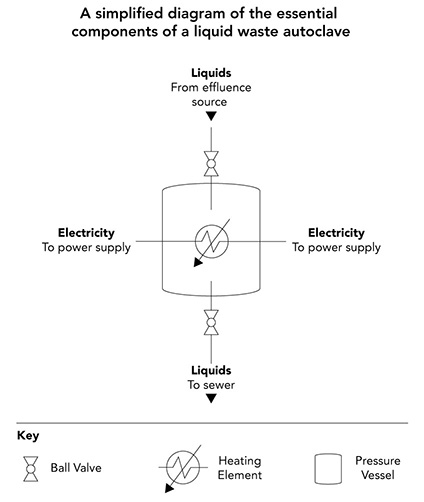


Key features include:

  • Sealed batch processing
  • Direct heating of liquid contents
  • Automatic control of pressure and temperature
  • Feedback systems for energy-efficient operation


When plumbed into a waste source, liquid waste autoclaves can operate with zero user contact, sterilizing waste before it's released into the sewer.


What Types of Biohazardous
Waste Liquids Are Produced
by the Life Sciences?

The life sciences—also known as biological sciences—encompass a broad range of research areas, many of which generate biologically hazardous liquid waste. Biohazards are defined as biological substances that pose a risk to living organisms. These typically include a wide variety of pathogenic microorganisms such as bacteria, viruses, fungi, and parasites.

 Table 1: Some sources of Liquid Waste 

Liquid Waste Source Process Description
Basin sink image Basins Basins can be connected directly to liquid waste autoclaves, ensuring that anything washed in them or poured into them is sterilized before it reaches the sewer system. Alternatively, specialized liquid waste autoclaves such as the AstellBio Sink are fitted with an inbuilt basin, allowing liquid waste to be poured directly into the autoclave.
Shower image Showers Decontamination showers can be connected to liquid waste autoclaves so that shower greywater can be sterilized automatically.
Bio waste container image Bio Waste Containers Liquid waste from Bio Waste Containers can be regularly emptied into a liquid waste autoclave to ensure sterilization, or poured directly into a basin-equipped autoclave such as the AstellBio Sink.
Drain image Drains and Sluices Connect floor drains and sluices directly to a liquid waste autoclave so that all water washed down is sterilized before entering the sewer.
Bioreactor image Bioreactors Instead of moving full bioreactors to a traditional autoclave, biohazardous liquids can be emptied into a liquid waste autoclave for easier sterilization.
Fish tank image Aquatic Systems Wastewater from aquatic systems containing pathogens or invasive species can be sterilized automatically before disposal via a liquid waste autoclave.
Hydroponic system image Hydroponic Systems and Growth Cabinets Condensate and nutrient-rich runoff from hydroponics can be drained into a liquid waste autoclave, ensuring sterilization of potentially hazardous materials.

Examples span the full risk spectrum—from high-risk, level 4 biohazards like Variola virus (smallpox) and Bacillus anthracis (anthrax), to low-risk, level 1 agents such as non-pathogenic Escherichia coli strains (e.g., E. coli K-12, E. coli DH5α), Bacillus subtilis, Saccharomyces cerevisiae (yeast), and Drosophila species (fruit flies and their cell cultures). Biological toxins produced by organisms may also be classified as biohazards, depending on their properties and context of use.

Life science researchers use these substances in a wide range of applications, from studying deadly pathogens like the Ebola and Marburg viruses to harnessing their genetic material for biomedical innovation—such as viral vectors for gene therapy or genetically engineered yeast strains used in pharmaceutical production.

Importantly, not only are the biohazardous organisms themselves considered hazardous, but any substances that come into contact with them must also be treated as potentially contaminated. In the context of liquid biohazards, this often includes culture media—liquid broths without solidifying agents (e.g., Tryptic Soy Broth, Nutrient Broth, Peptone Water). If a biohazardous agent has been cultivated in the broth, the medium itself must be treated as a biohazard.

Macro-organism research can also generate hazardous liquid waste. For instance, aquatic organisms infected with pathogens such as Vibrio cholerae (cholera), Mycobacterium marinum, or Infectious Hematopoietic Necrosis Virus (IHNV) can release these agents into their aquatic environments, making the surrounding water a biohazard.

Continuing with this theme—though not for the squeamish—research involving infected macro-organisms often produces biologically contaminated fluids such as blood, urine, and plasma. Additionally, washdown water from biological containment autopsy rooms also qualifies as biohazardous and requires sterilization.

Plant-based research can contribute to hazardous liquid waste as well. Horticultural studies involving pathogens like Agrobacterium tumefaciens or tobacco mosaic virus contaminate the water used in plant growth. The rise of hydroponic systems, which are increasingly favored for their precise environmental control, can further increase the volume of biohazardous wastewater.

While recovery and reuse of materials from these liquids is often desirable, many scenarios demand full decontamination and disposal to ensure safety and regulatory compliance.


 Table 2. Biohazardous Liquid Waste Types 
Source/Process Example Liquids Typical Hazards
Microbiology & Molecular Biology Culture media, bacterial suspensions Pathogenic bacteria, GMOs
Virology Virus-infected solutions Viral pathogens
Clinical & Biomedical Research Blood, plasma, urine, tissue wash fluids Bloodborne pathogens, prions
Aquatic Biology Fish tank water, tank effluent Fish pathogens, marine viruses
Plant Research Hydroponic runoff, soil leachate Plant pathogens, genetic materials
Genetic Engineering Media containing GMOs, engineered DNA/RNA GMO leakage, environmental risk

Other Than Biohazards,
What Other Waste Liquids
Might Need Sterilization
in the Life Sciences?

The sterilization of biologically hazardous waste is a critical component of containment protocols. In many countries—including the United Kingdom, Canada, and Australia—biologically hazardous materials may only be handled in facilities with a containment level (CL) appropriate for the material’s risk classification. Internationally, this framework is often referred to as the Biosafety Level (BSL) system. Both CL and BSL frameworks include four tiers, from Level 1 (minimal risk) to Level 4 (maximum containment for the most dangerous pathogens).

However, not all substances requiring containment are classified strictly as biohazards. For example, genetically modified organisms (GMOs) often require controlled handling and containment, even if they are not inherently pathogenic. In many jurisdictions, containment measures are legally mandated for GMOs. In some cases, organisms can be engineered to be non-viable outside laboratory conditions. Where this is not feasible—particularly for organisms capable of surviving and reproducing in the external environment—it becomes essential to house them within a certified containment facility.

In such facilities, particularly at Containment Level 2 and above, all contaminated liquid waste must be sterilized before it can leave the premises. This includes not only biohazardous waste but also waste containing genetically modified organisms, recombinant DNA, or other engineered biological agents. Sterilization in this context is not only a safety measure—it is a legal and ethical requirement for maintaining environmental and public health standards.


Why Liquid Waste Autoclaves
Outperform Other Methods

Vs. Traditional Autoclaves:

  • No manual handling of hot waste containers
  • Fully automated operation


Vs. Chemical Sterilization:

  • No use of corrosive, toxic, or environmentally hazardous chemicals
  • No risk of expired or improperly dosed sterilants


Vs. UV Sterilization:

  • Steam penetrates opaque or particle-laden waste
  • No "shadowing" or dependency on line-of-sight


Liquid waste autoclaves provide consistent, validated sterilization where other systems fail or require dangerous compromises.


 Table 3: Comparison of Sterilization Methods 
Feature Liquid Waste Autoclave Traditional Autoclave Chemical Sterilization UV Sterilization
Automation Full Manual Semi-automated Full
Chemical-free ✅ ✅ ❌ ✅
Hazardous Byproducts ❌ ❌ ✅ ❌
Effectiveness on Particulates ✅ ✅ ✅ (with contact) ❌ (limited by shadowing)
Safety High Moderate Low Moderate
Maintenance Low Moderate High (chemical handling) High (bulb replacement)
Environmental Impact Low Low High Medium
Continuous Operation ✅ ❌ ✅ ✅

Eco-Friendly and Automated Sterilization

These systems are energy-efficient, using only water and electricity, with no harmful byproducts. Once installed, they require minimal consumables and maintenance. This makes them a sustainable choice compared to UV systems (with short-lived bulbs) or chemical treatments (with disposable reagents and environmental toxicity).

Automation options include:

  • Direct plumbing from waste source
  • Input basins for manual pour-in
  • Programmable sterilization cycles


 Table 4. Environmental Impact of Sterilization Methods 
Method Resource Usage Chemical Residues Risk to Sewage/Aquatic Systems Sustainability
Liquid Waste Autoclave Electricity + Water None None High
Traditional Autoclave Electricity + Water None None High
Chemical Sterilization Chemicals + Water Yes High Low
UV Sterilization Electricity + Bulbs None None Medium

Why Are Liquid Waste Autoclaves
Essential in Life Sciences?

Life science research sometimes involves the use of biological microorganisms or components that are harmful to life—such as pathogenic bacteria and viruses—or that pose a risk to the wider environment. To mitigate these risks, such biological materials are often licensed for use only within biologically controlled and confined environments, such as containment laboratories. These laboratories are specifically designed to control the movement of biological components.

However, certain items must still enter and exit the laboratory to support research activities. Liquids are one such substance. As a byproduct of the research process, these liquids can become contaminated with harmful microorganisms and biological material. For this contaminated liquid waste to leave the containment environment while still complying with containment protocols, the biological material must either be removed or destroyed to ensure it does not escape the controlled setting. A liquid waste autoclave is designed to achieve this latter objective.

A liquid waste autoclave is a specialized device used solely for sterilizing waste liquids. Autoclaves sterilize through the application of heat. In a traditional autoclave, water is heated under pressure, allowing it to reach temperatures above 121 degrees Celsius—temperatures that are lethal to microorganisms and destructive to biological material. The heated steam acts as a carrier, transferring heat to the items inside the autoclave. This method has been highly effective and widely used in laboratories since 1879.

The liquid waste autoclave advances this principle by heating the contaminated liquid waste directly within a pressurized vessel. In this setup, the liquid itself becomes the medium for heat transfer, ensuring direct and even heating of any biological material within. Maintaining the waste at this high temperature for a predefined period guarantees the destruction of all biological contaminants in the liquid.


Biohazardous liquid waste can include:

  • Water mixed with liquid culture media (e.g., Tryptic Soy Broth, Peptone Water)
  • Water mixed with Urine, blood, and plasma samples
  • Washdown water from autopsy or containment rooms
  • Aquatic water from contaminated organisms
  • Hydroponic water from plant research involving pathogens


Regulations in many countries (e.g., BSL/CL standards) require sterilization of such liquids before they can leave a containment area. Liquid waste autoclaves are uniquely suited for this task.


What Types of
Biohazardous Liquids
Are Common in Research?

Biohazardous liquids stem from a wide range of studies:

  • Pathogen research (e.g., Ebola, Anthrax)
  • Genetic engineering (e.g., viral vectors, transgenic yeast)
  • Horticulture (e.g., Agrobacterium, TMV)
  • Zoology (e.g., contaminated aquatic environments)

Even low-risk organisms like E. coli DH5α or yeast can create hazardous waste when used in genetic manipulation. All associated liquids must be treated before disposal.


Beyond Biohazards:
Why Other Liquids
Need Sterilization

Genetically modified organisms (GMOs), though not pathogens, often require containment. Liquid waste from GMO research may be legally required to be sterilized prior to disposal to prevent environmental contamination or unintended gene transfer.


FAQs

What is the best autoclaving method for biohazardous liquids in molecular biology labs?

A liquid waste autoclave offers a superior method for sterilizing liquid waste in molecular biology laboratories. The thermal sterilization method used by autoclaves is one of the most common and effective techniques for treating waste materials. It requires only heat energy—typically derived from electricity—making it a straightforward process that avoids the need for storing and handling hazardous sterilizing chemicals.

Autoclaving also delivers a highly penetrative form of sterilization, capable of destroying contaminants even through solid materials, without requiring a direct line of sight. However, manually loading and unloading liquids into a traditional autoclave can be cumbersome and potentially hazardous.

A liquid waste autoclave addresses this issue by automating both the handling and sterilization of liquid waste. When connected directly to the source of the waste, no user interaction with contaminated liquids is necessary—the waste can flow directly into the autoclave, where it is sterilized and then safely discharged into the sewer system. Alternatively, units equipped with a basin allow users to manually pour in liquid waste as needed.

In this way, the liquid waste autoclave provides the trusted and effective sterilization capabilities of a traditional autoclave, while eliminating the complexity and risks associated with manual loading and unloading.

Can liquid waste autoclaves handle continuous flow waste?

Yes, liquid waste autoclaves can effectively manage continuous flow waste by integrating batch sterilization with a holding tank system.

Process Overview:

Batch Sterilization: The autoclave sterilizes liquid waste in batches, processing a fixed volume of contaminated liquid during each cycle. During this period, the liquid waste autoclave operates as a sealed system, preventing any liquid from entering or leaving.

Holding Tank Integration: To accommodate continuous inflow of liquid waste, effluent is temporarily diverted into a holding tank while the autoclave is actively sterilizing the previous batch. This allows uninterrupted collection of waste even during the sterilization cycle.

Sequential Transfer: Upon completion of the sterilization cycle, the next volume of liquid waste stored in the holding tank is automatically transferred into the autoclave chamber for treatment. This cycle repeats, enabling continuous management of biologically contaminated liquid waste.

By combining batch sterilization with an automated holding tank transfer system, liquid waste autoclaves maintain effective sterilization without interrupting continuous waste generation.

Are liquid waste autoclaves environmentally friendly?

They rely only on heat and water, and use no hazardous chemicals—ideal for green laboratories. By applying heat to liquid waste under pressure, biological material within the waste is destroyed. This process requires electrical energy—which, when sourced sustainably, provides an environmentally friendly sterilization method.

Unlike chemical sterilization systems that rely on a continuous supply of hazardous chemicals transported to the site—adding to environmental impact—liquid waste autoclaves depend only on heat and water, generating no toxic runoff.

Once installed, a liquid waste autoclave requires minimal maintenance and few additional components. For example, its heating elements have a significantly longer functional lifespan compared to the bulbs used in ultraviolet (UV) light sterilizers.

How Do I Know the Liquid Waste Has Been Sterilized?

Liquid waste autoclave systems monitor temperature and pressure digitally and often include options for biological indicator validation, providing full assurance of sterility.

Like traditional autoclaves, liquid waste autoclaves are often fitted with two inbuilt methods of confirming that sterilizing temperatures have been reached:

  • Analog Pressure Gauge:
    This provides a mechanical reading of the pressure inside the sterilization tank.
    Boyle’s law links temperature to pressure in a sealed environment, so reading the pressure within the sterilization tank allows the user to know the temperature within. Manually checking that the pressure is at the required level for the desired time is the original pre-digital method of ensuring an autoclave has effectively run a sterilisation cycle at the correct temperature.
  • Digital Temperature Probes:
    Many liquid waste autoclaves are equipped with multiple probes that directly measure the temperature of the liquid waste. These feed data to a control system that ensures the liquid is held at the correct temperature for the necessary time to sterilize all biological material. The system can also adjust temperature incrementally to optimize energy efficiency while maintaining effective sterilization. Such digital systems often keep a record of temperature data for later analysis, and will rerun a sterilization cycle if it fails.

A third validation method involves biological indicator capsules placed within a biowell. A biowell is an access point thermally equivalent to the center of the sterilization tank but located outside the chamber. This allows a biological indicator capsule, containing resilient spores that challenge the sterilization process, to be exposed to the same temperatures as are inside the sterilisation tank.

After the sterilization cycle, the capsule is removed and incubated. If spores survive, they grow and cause a color change in the capsule, indicating sterilization failure. If sterilization is successful, the capsule retains its original color. This provides a biological test, and a third method, of validating the liquid waste autoclave cycles.

Liquid Waste Autoclave Validation Features and Benefits

Table 4: Liquid Waste Autoclave Validation Features and Benefits
Feature Purpose Benefit
Pressure Gauge Monitor internal pressure Ensures target temperature is reached
Digital Temperature Probe Measures real-time temp Confirms sterilization effectiveness. Allows for automated digital process control.
Biological Indicator Biowell Houses spore-based validation capsule Provides verifiable proof of sterility

AstellBio Liquid Waste
Autoclaves Solve Your
Liquid Biohazard Problem

AstellBio designs advanced liquid waste autoclaves tailored for life sciences, biotech, pharma, and healthcare research. Engineered for performance, safety, automation, and sustainability, they offer a future-proof solution for liquid waste sterilization. Contact us to learn how our systems can meet your containment and decontamination needs.


AstellBio Produce A
Wide Array Of
Liquid Waste Autoclaves

From compact units that sterilize tens of liters per hour to mighty effluent decontamination systems capable of processing thousands of liters simultaneously, AstellBio has a wide array of wastewater sterilization solutions.


AstellBio Sink & Autoclave Combo

Details

Provide your laboratory with safe, chemical-free sterilization alongside wastewater decontamination. The Combo combines the AstellBio Sink with the popular AMA440 Compact Top-loading Autoclave to create a versatile sterilization station. The AstellBio Sink & Autoclave Combo is fitted with castors for easy movement.

Contact us now on +44 (0)20 8309 2031 to find out more, or request a quotation by clicking here. 

Model: COMBO440 ( 25L Holding Tank, 9L Sterilisation Tank )

AstellBio Sink

Details

Provide your laboratory with safe, chemical-free wastewater decontamination. Liquids and wastewater washed into the AstellBio Sink washbasin flow into an Effluent Decontamination System ( EDS ), where they are automatically thermally sterilised before being dispatched to the drain.

Contact us now on +44 (0)20 8309 2031 to find out more, or request a quotation by clicking here. 

AstellBio Micro EDS

Details

The versatile AstellBio Micro Effluent Decontamination System ( EDS ) can be plumbed onto the wastewater drain from applications of your choice. Biological material in wastewater is thermally sterilised automatically as it passes through the unit.

Contact us now on +44 (0)20 8309 2031 to find out more, or via the contact page here.

AstellBio 1 x 1 Batch Thermal EDS

Details

This 1 x 1 Batch Thermal EDS has a sterilization tank for denaturing biological material and a holding tank for collecting wastewater.

Contact us now on +44 (0)20 8309 2031 to find out more, or via the contact page here.
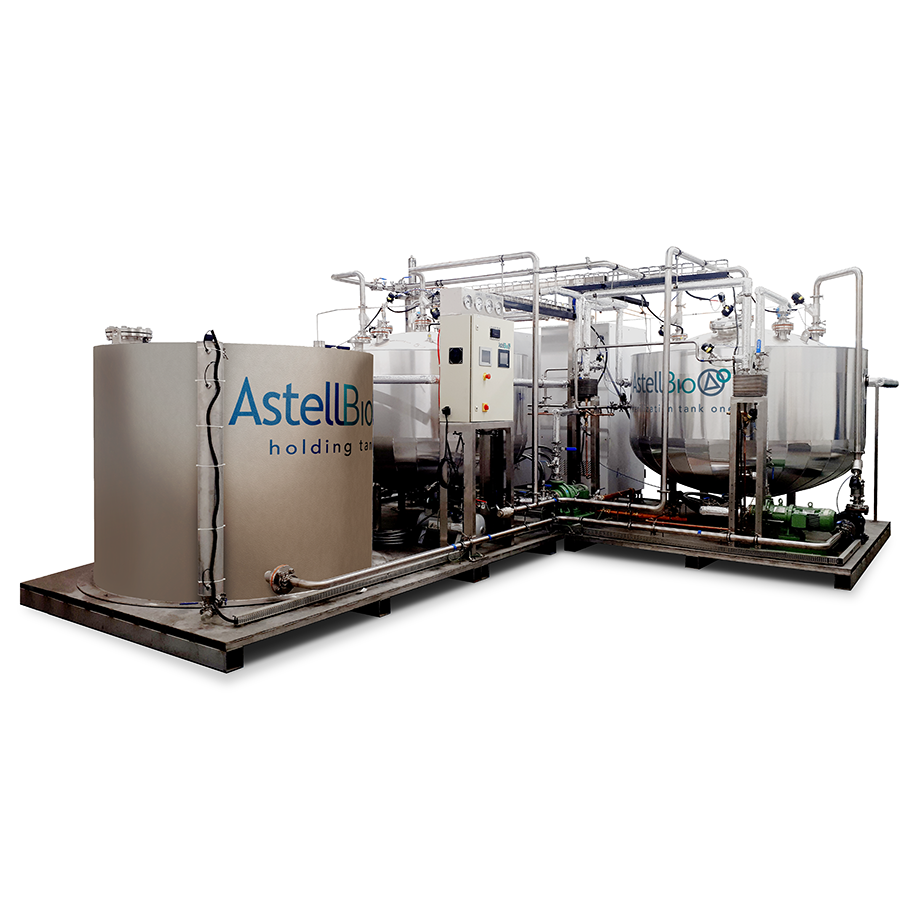
AstellBio 1 x 2 Batch Thermal EDS

Details

Two sterilization tanks allow this effluent decontamination system to thermally sterilize more liquid waste faster.

Contact us now on +44 (0)20 8309 2031 to find out more, or via the contact page here.

AstellBio 0 x 2 Batch Thermal EDS

Details

This EDS has two sterilization tanks and no holding tank. While one tank is sterilizing effluent, the other acts as a holding tank. These roles then reverse after the active sterilization tank empties.


Contact us now on +44 (0)20 8309 2031 to find out more, or via the contact page here.

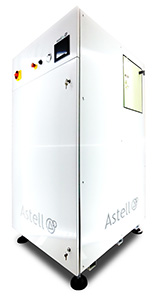
ASTELLBIO LIQUID WASTE AUTOCLAVE 200

Details

The AstellBio Liquid Waste Autoclave 200 revolutionizes the disposal of biologically contaminated liquid waste, making the process safer, faster, and entirely automated. This state-of-the-art system eliminates the need for manual handling or chemical treatment, significantly reducing staff workload and training requirements.

Model:

Sign up for news

Please review our Privacy Policy for how we use your data.

Call us

+44 (0)20 8309 2031

Email us

sales@astellbio.com

View our range of autoclaves and sterilizers at astell.com

ASTELL BIO

19 - 21 Powerscroft Road
Sidcup
Kent
DA14 5DT
United Kingdom

VAT No: GB 586 50 3322
Company No: 487717

Astell Bio is a trading name of Astell Scientific Limited

Made in the UK since 1884
© 2026 Astell Scientific  |  GDPR Policy | Privacy Policy | Terms and conditions | Sitemap  |  Website by Drum
✖

You are currently viewing our global site.

We have detected that you're viewing our global site from the US. Would you like to go to the US site or continue browsing the global site?